

A trailer camera is most useful when it helps you answer one question: has something changed enough that I need to stop safely and look? It cannot diagnose stress, pain or injury, and it does not replace planned breaks or a physical inspection. What it can do is reveal posture, movement and changes inside a space that would otherwise be out of sight.
This guide is published by Amouu, seller of the NomadEye Horse Trailer Camera featured below.
What should a horse trailer camera show?
The best view is not necessarily the widest or most dramatic picture. It is the frame that keeps the important relationships visible: the horse in relation to the floor, divider, equipment and companion space.
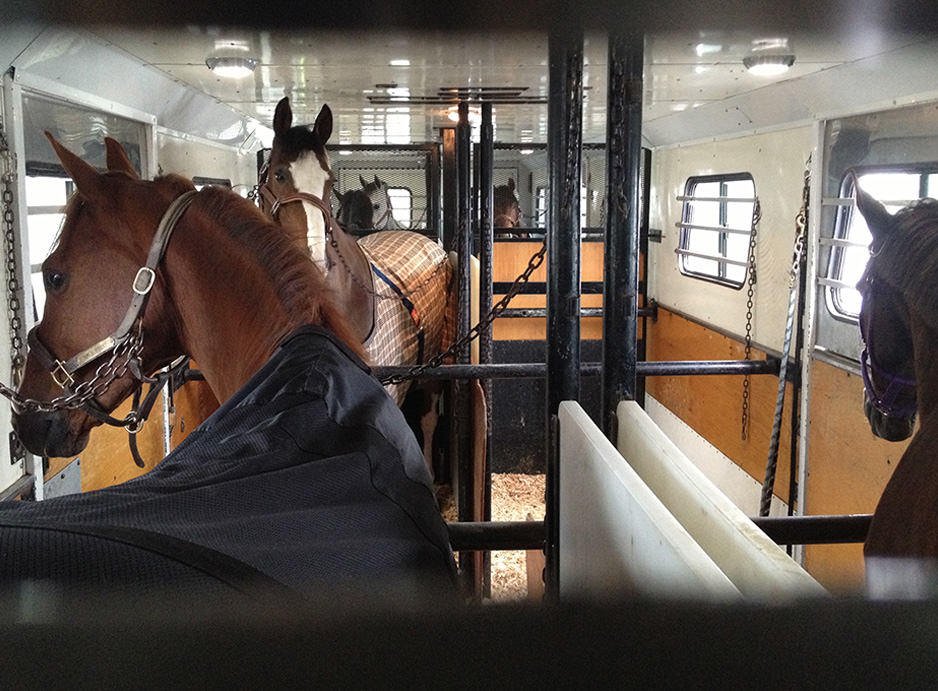
1. Head and upper body
Frame enough of the head, neck and shoulder to notice position and repeated movement. A camera aimed only at the ceiling may show that the unit is online without showing what the horse is doing. A view aimed too tightly at the face can lose the surrounding context.
2. Stance or floor area
You do not need a perfect view of every hoof, but seeing enough of the lower body or stance area helps you notice how the horse is making balance corrections. Research journeys recorded on continuous video show that travel behavior and balance-related movement can vary across a journey. That supports watching patterns over time, not assigning one movement a universal meaning.
3. Divider and companion space
If the trailer carries more than one horse, frame the divider and enough of the neighboring space to see whether normal movement is becoming crowding, repeated contact or an equipment problem. Even with one horse, the divider is a useful fixed reference: it helps you see whether the horse has shifted position.

4. Hay, ties, doors and nearby fixtures
A live view should include anything close enough to enter the horse's space. A slipping hay net, moved tie, loose object or changed door area may be more actionable than the horse's expression on a small screen. The camera does not tell you why something moved; it gives you an early cue to inspect it.
Start by learning one horse's travel baseline
There is no single screen image that proves every horse is comfortable. Horses differ, trailer layouts differ and the view itself changes with road surface, turning, braking, ventilation, light and companion arrangement.
Your most useful reference is the same horse under comparable, well-managed conditions. On an early journey, have a passenger observe or review the camera at safe points and note a few simple things:
- where the horse usually positions the head and neck;
- how often the horse adjusts stance on straight, smooth travel;
- whether eating or looking around is part of the normal pattern;
- how the picture changes during turns, stops and rougher road; and
- which parts of the horse or trailer drop out of the frame.
Keep that baseline descriptive. “Head lowered for most of the smooth section, several brief stance changes at turns” is more useful than “relaxed.” The first records what the camera showed. The second adds an interpretation the image may not be able to support.
Two owners described this discovery problem in current equestrian discussions: camera footage showed pronounced or unusual-looking behavior that was not apparent from the tow vehicle. Those reports are anecdotal, but they capture the reason a baseline matters. The value is not constant watching; it is being able to compare a new pattern with something you have seen before.
Four things worth watching during the journey
Repeated change in head or body position
A brief adjustment during a turn is different from a new movement that repeats on a straight section or continues after the road smooths out. Watch duration, repetition and context. If the horse moves out of frame, do not guess what is happening beyond the camera—restore a useful view at the next safe opportunity.
Balance corrections and loss of usable stance space
Transport requires horses to adjust to vehicle motion. What deserves attention is not the fact that an adjustment occurs, but a meaningful change: increasingly frequent corrections, a persistent altered position, repeated contact with the divider or an inability to see enough of the stance area to judge the situation.
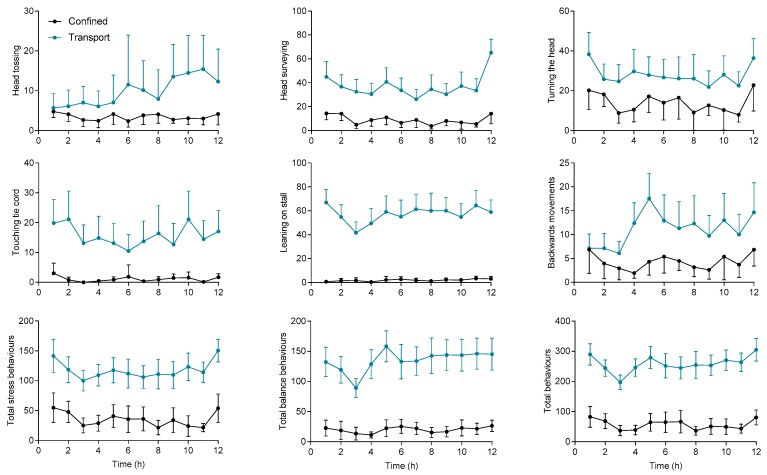
A controlled study using continuous video found different behavior patterns at different points in an eight-hour journey. It involved a limited group of research horses and does not provide a consumer alarm threshold. Its practical lesson is narrower: time and journey conditions matter, so a single frozen moment should not be treated as the whole story.
Changes in equipment or the trailer environment
Check the fixed objects in the picture. Has a hay net dropped? Has a tie or lead changed position? Is bedding or another loose item moving differently? Is part of the door, divider or camera mount no longer where it was at departure? These are concrete screen observations that can justify a closer check without asking the camera to interpret the horse.
Interaction with a companion horse
When horses travel together, notice changes in spacing and repeated contact. The camera should not be used to label one horse aggressive or anxious from a short clip. It can show that the arrangement has changed and that the animals, divider and ties should be inspected safely.
A simple observe-or-stop decision framework
The safest decision is not the one that produces the cleverest interpretation. It is the one that recognizes the limits of a remote view.
| What the camera shows | Useful response | Why |
|---|---|---|
| A brief change linked to a turn or stop, followed by the horse's usual pattern | Keep the journey smooth and observe at the next safe glance or planned check | Context and recovery are visible |
| A new movement or position that repeats, lasts or increases | Arrange a safe stop and physical inspection | The screen shows change but cannot determine cause |
| A shifted fixture, loose object, repeated divider contact or reduced usable space | Stop safely and secure the environment before continuing | The possible hazard is physical and actionable |
| The camera is offline, blocked, badly aimed or too dark to confirm the situation | Do not treat “no image” as “no problem”; use the next safe stopping place to check | Loss of visibility removes the camera's evidence |
| A possible injury, collapse, entrapment or immediate danger | Follow emergency and road-safety procedures, stop as safely as possible and seek appropriate veterinary help | A live view cannot resolve an emergency |
Planned journey checks still matter even when the picture looks unchanged. Transport welfare guidance puts responsibility on the person planning and carrying out the journey; a camera is one input within that plan, not permission to extend the interval between necessary checks.
Monitor without creating distracted driving
The driver should not study a phone, troubleshoot an app or interpret a long video feed while the vehicle is moving. Road-safety guidance is unambiguous about the risk of phone distraction, and local laws may impose additional restrictions.
- Use a passenger as the primary observer when one is available.
- If local law permits a mounted display, keep any driver glance brief and comparable to checking another vehicle instrument.
- Pull over safely before touching the phone, changing the camera view or reviewing a clip.
- Decide in advance which changes require the passenger to speak up and which require a safe stop.
- Do not let a poor connection turn into repeated on-road troubleshooting.
The aim is less uncertainty, not a new source of driver workload.
The five-minute pre-departure camera check
- Load and secure the horse first. The final field of view matters more than the empty-trailer view.
- Confirm the four zones. Check head and upper body, useful stance area, divider or companion space, and nearby fixtures.
- Check day and low-light conditions. A view that works at the barn door may change after the trailer is closed.
- Confirm the mount and nearby objects are secure. The camera must not become another loose item.
- Give the observer a decision rule. Agree on what to report and where the driver can stop safely if a physical check is needed.
If you are still choosing a system, start with the Amouu guide to choosing and positioning a camera inside a horse trailer. It covers the selection and setup questions that come before this observation routine.
Where does the NomadEye Horse Trailer Camera fit?

The NomadEye Horse Trailer Camera is designed as a portable, phone-view monitoring option with a magnetic mounting route for compatible trailer surfaces. That makes it possible to test the frame after loading and reposition the view for the layout in front of you.
The practical fit question is simple: can the mounting position show the zones that help you make a safer decision? Test the actual trailer, horse position, lighting and phone connection before depending on the view. Do not assume a specification replaces that trial.
See the current NomadEye product details and images, or compare monitoring options in the Horse Trailer & Stable Cameras collection.
Frequently asked questions
Should a horse trailer camera show the whole horse?
Show as much as the trailer layout allows, but prioritize a useful relationship: head and upper body, enough stance area to notice balance corrections, the divider and nearby fixtures. A very wide image is not useful if the important areas are too small or dark to read.
How often should I check the camera?
There is no universal screen-check interval. Use a passenger when possible, keep driver glances brief and lawful, and maintain the planned physical checks appropriate to the route, conditions, horse and applicable transport rules. The camera should support that plan, not replace it.
Can a trailer camera tell whether my horse is stressed?
It can show visible behavior and change, but it cannot diagnose stress, pain or injury. Record what changed, stop safely when the pattern persists or creates concern, and inspect the horse and environment directly.
What if my horse moves out of the camera view?
Do not guess what is happening off-screen. At the next safe opportunity, inspect the horse and adjust the camera so the key observation zones remain visible. Treat an obstructed or unusable view as missing information.
Should the driver watch the live feed?
A passenger should monitor when available. The driver should not hold or interact with a phone while moving and should pull over safely before troubleshooting, reviewing video or making a detailed assessment. Follow the traffic laws that apply to the journey.
Does a trailer camera replace stopping to check the horse?
No. It can provide an early cue and help you choose when an additional check is needed, but planned stops, direct inspection, safe towing practice and appropriate veterinary help remain separate responsibilities.
Sources and review note
- Peer-reviewed study: behavior and physiological responses during an eight-hour road journey
- Peer-reviewed study: horse transport conditions and recorded behavior
- GOV.UK: animal welfare in transport guidance
- NHTSA: distracted-driving guidance
- ExtensionHorses: Part 4 The Trailer: Home of the horse — verified Purdue University trailer-safety demonstration.
Source review: 8 August 2026. This Article offers an observation and decision framework, not veterinary diagnosis, a universal behavior threshold or a substitute for direct inspection. Product details are intentionally limited to current, non-conflicted facts while the exact NomadEye technical specifications remain under review.


